A Thing Or Two About Fruit Trees
 For anyone interested in growing fruit tree(s) and anyone interested in how their fruit is grown.
With exception to tropical fruit, most of the commercially available fruit (citrus, apple, peach, avocado, etc) does not exist in the wild. The fruit we consume was created from selective breeding (hybridization) and accidental discovery. These fruit are mutant fruit; if you will.
“Hybridization occurs in one of three ways. People can manually cross citrus through assisted sexual reproduction, transferring pollen from one plant to another and seeding from resulting fruit. This kind of trial-and-error, wait-and-see experimentation requires great patience. Alternatively, people can hunt for desirable varieties that appear spontaneously on eccentric tree branches– mutations known as bud sports or chimeras. In the atomic age, plant breeders gained a third technique: bombarding seeds with radiation to induce mutations. (The popular Rio Red grapefruit came into being at Brookhaven National Laboratory on Long Island.) Once a desirable varietal has been created or discovered, it must be asexually copied to be perpetuated. Citrus hybrids are unstable: sweet orange seed may sprout into a sour lemon. Only grafting produces uniform, predictable results.”
Farmer, Jared. Trees in Paradise: A California History. New York: W. W. Norton, 2013. 227-228. Print.
Continue Reading
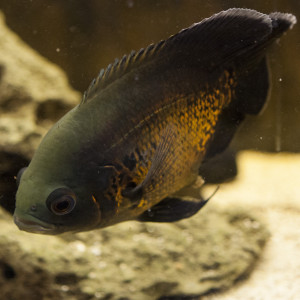 Meet “Roc,” the red oscar cichlid. He is the latest Garden Pals member; and eats like a very hungry caterpillar. In fact, his favorite snacks are very hungry caterpillars. A very eager feeder, he wastes no time waiting for his meals to hit the water. Often he will leap out of the water and help himself. (See video below.)
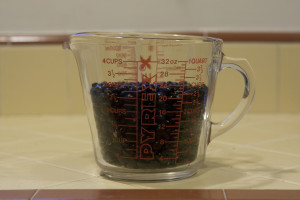 One of my favorite bean to eat and cook with is the black bean. I prefer it in burritos, in restaurant style nachos, and in lotus soup. In addition to adding texture to food, black beans are good for you and your liver. In the garden, they are one of the easiest plants to grow.